ICPC — Interstate Compact
On this page
|
Target-state design page: the screens below are the design engagement’s
target mockups, not the as-built system. Built today: the ICPC worklist
( |
The ICPC module manages Interstate Compact on the Placement of Children requests — the legal framework that governs when a child in foster care is placed across state lines. Every interstate placement requires an ICPC request and a completed home study before the child can move. The Safe and Timely Interstate Placement of Foster Children Act mandates that receiving states complete home studies within 60 business days of receiving a request. The deadline is tracked per request; automatic monitoring and flagging by the Rules Engine is a design target (see the note above).
Primary users: ICPC Coordinators, Caseworkers, Supervisors
Screen 1: ICPC Request Worklist
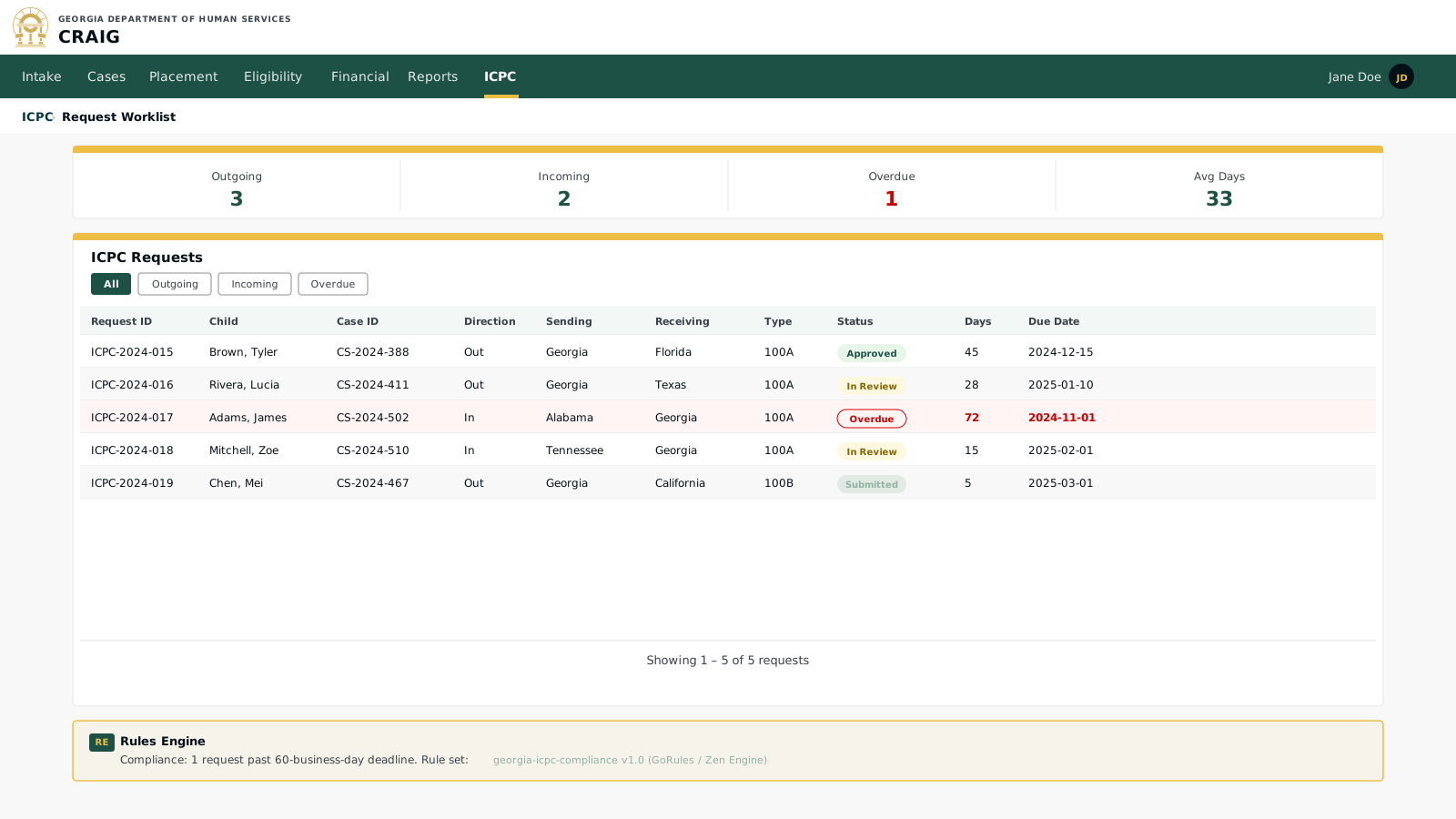
The worklist provides a centralized view of all outgoing and incoming ICPC requests. Outgoing requests are those where Georgia is the sending state; incoming requests are those where Georgia is the receiving state and must complete a home study. In the target design, the Rules Engine monitors the 60-business-day deadline for each request and escalates overdue items.
Key elements:
-
Direction-based filtering: filter tabs separate outgoing, incoming, and overdue requests; ICPC coordinators typically work one direction at a time.
-
Timeliness tracking: the Days Pending column and stat tiles give immediate visibility into caseload aging; overdue rows are highlighted in red.
-
Stat tiles: outgoing count, incoming count, overdue count, and average days pending provide a dashboard summary without leaving the worklist.
-
Rules Engine compliance panel: surfaces requests approaching the 60-business-day deadline and flags any that have exceeded it, with the rule set name and version always displayed.
Screen 2: ICPC 100A Request
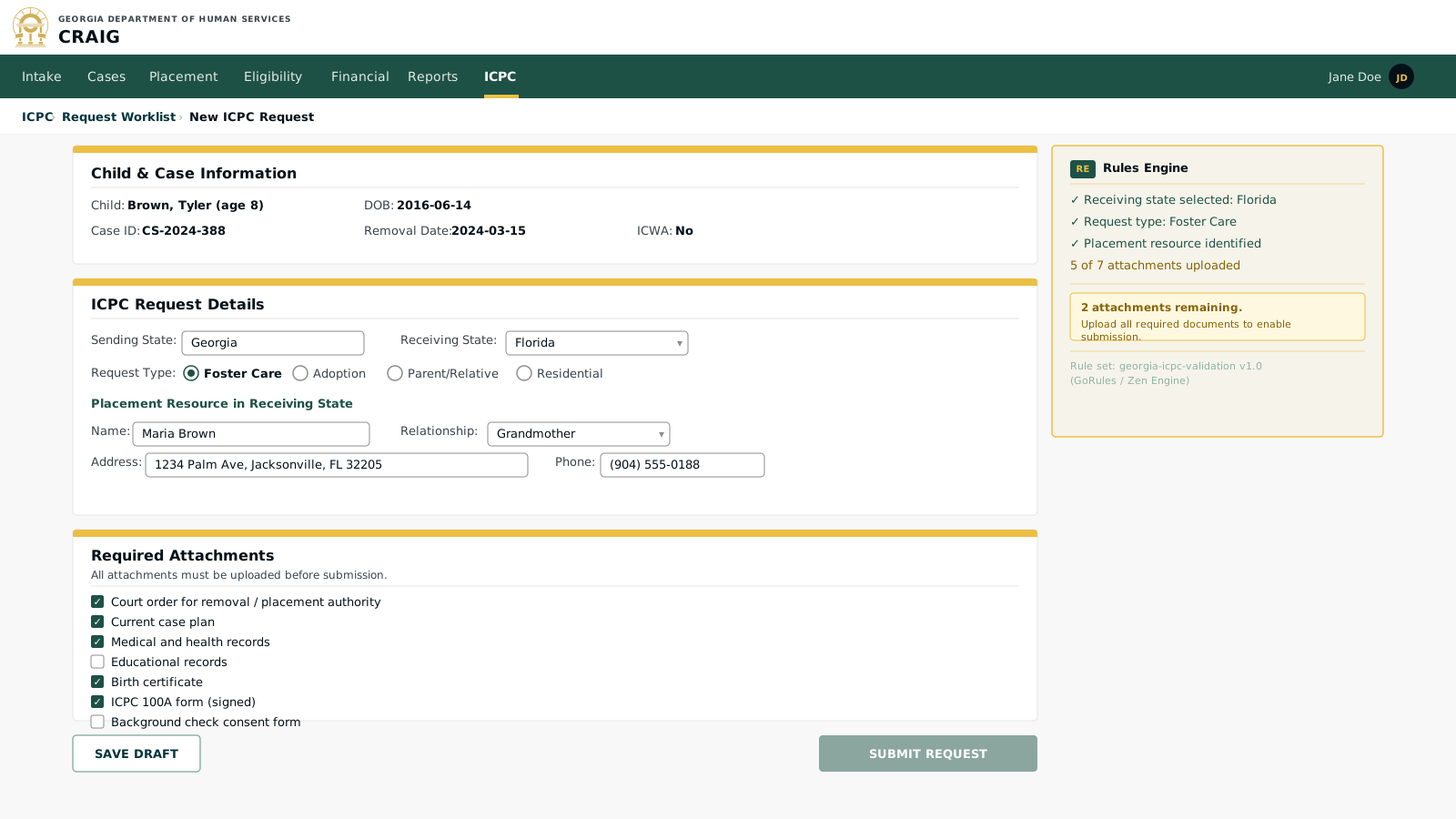
The 100A request form (the compact’s standard placement-request document) captures the information required to send an interstate placement request to the receiving state. Child and case information is pre-populated from the case record; the worker selects the receiving state, request type, and placement resource, and uploads required attachments. In the target design, the Rules Engine validates completeness before submission.
Key elements:
-
Pre-populated child information: name, DOB, case ID, removal date, and the Indian Child Welfare Act (ICWA) flag are pulled from the case record to avoid re-entry and ensure consistency.
-
Request type selection: the built vocabulary has five types — foster care, relative placement, adoptive placement, residential treatment, and parent relocation; the type determines which additional documentation is required.
-
Attachment checklist: court order, case plan, medical and educational records, birth certificate, ICPC 100A form, and background check consent must all be uploaded before submission.
-
Rules Engine validation panel: validates all required fields and attachments in real time; the submit button is disabled until all requirements are met, preventing incomplete requests from being sent to the receiving state.
Screen 3: Home Study Review
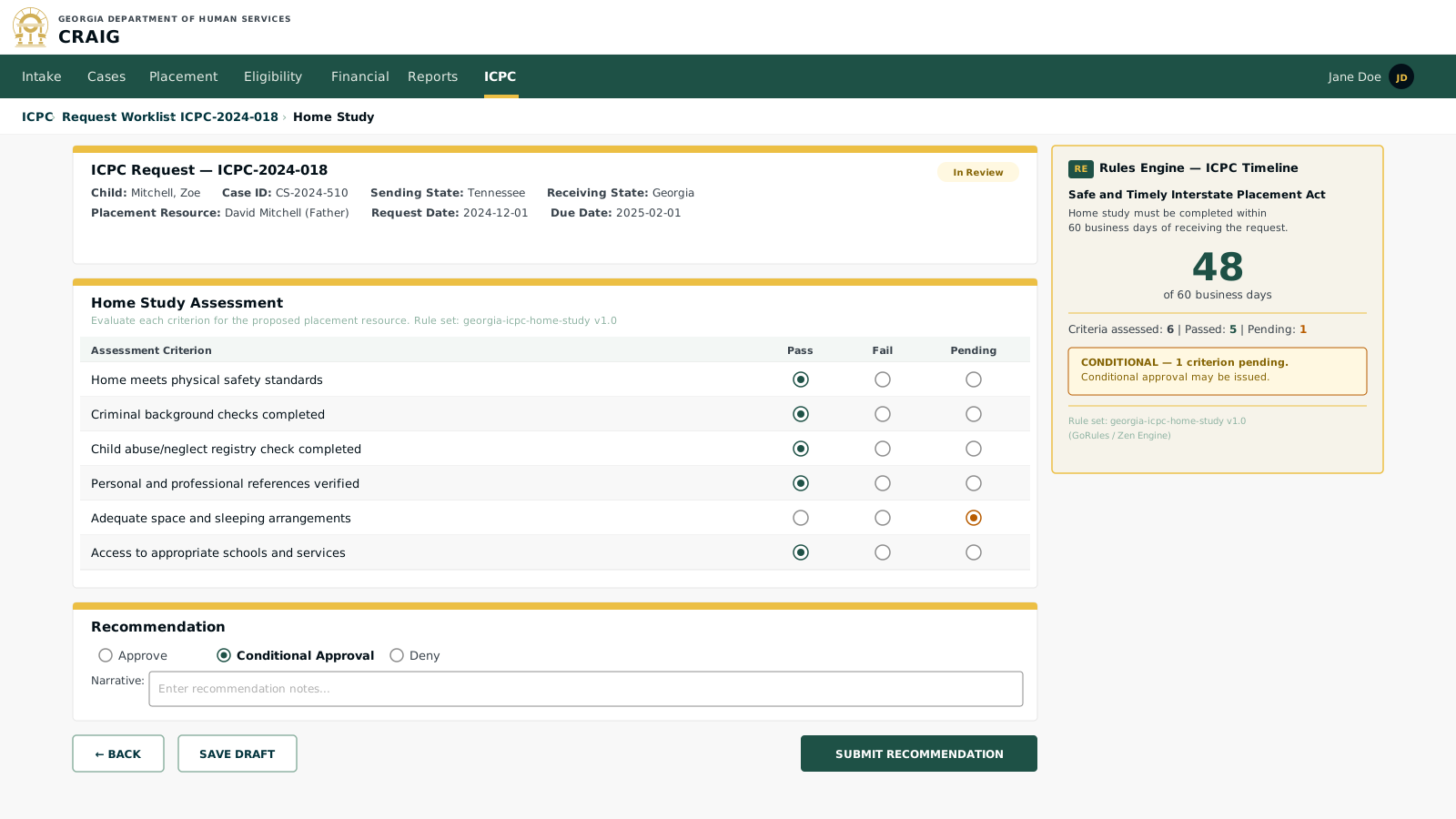
When Georgia is the receiving state, the ICPC coordinator conducts a home study on the proposed placement resource. The home study assessment evaluates safety, background checks, references, and capacity. In the target design, the Rules Engine produces a recommendation from the assessment results and monitors the 60-business-day completion deadline.
Key elements:
-
Request summary: the request ID, child, sending state, placement resource, and due date are displayed at the top so the coordinator has full context.
-
Assessment criteria table: each criterion (home safety, background checks, references, space, support, education access, medical access) is assessed. The design target is a closed Pass/Fail/Pending taxonomy feeding a computed recommendation; as built, each criterion is a free-text assessment narrative.
-
Rules Engine recommendation: the design target is a computed recommendation (all criteria passed yields Approve; one or two failures yields Conditional; more than two yields Deny). As built, the recommendation is a free-form string supplied with the home study; the coordinator’s decision and documented override justification are recorded.
-
Timeline compliance: the Rules Engine panel displays days remaining until the 60-business-day deadline and alerts the coordinator as the deadline approaches.