Title IV-E Eligibility
On this page
|
Target-state design page: the screens below are the design engagement’s target mockups, not the as-built system. Built today: the Title IV-E (Social Security Act, Title IV-E) foster care determination is an API surface in craig-cases, evaluated through the jurisdiction’s JSON Decision Model (JDM) ruleset and recording the rule-set name, revision, evaluation id, federal financial participation (FFP) rate, and decision basis; craig-financial ships the claiming surface (a claiming record generated from disbursed payments, with list/detail/submit screens in craig-web). No eligibility wizard or dedicated eligibility screen exists in craig-web yet. The determination record is deliberately fenced from money paths today (the #1054 fence; #1313 tracks the eventual wiring). Adoption-assistance eligibility is unbuilt, and guardianship-subsidy eligibility is a placement-side service read (ADR-056), not a rules determination. |
The Eligibility module is designed to drive Title IV-E foster care, adoption assistance, and guardianship assistance determinations. All determinations are powered by the Rules Engine (GoRules / Zen Engine) using jurisdiction-specific JDM rule sets, ensuring identical automated eligibility logic is applied consistently for every worker and every child — as required by 45 CFR § 1355.52(g).
Primary users: Caseworkers, Eligibility Workers, Supervisors, Administrators
|
Every eligibility determination records the rule set identity and revision used (e.g., |
Screen 1: IV-E Eligibility Determination Wizard
The determination wizard walks the worker through the federal eligibility criteria in structured steps. The Rules Engine evaluates responses at each step and surfaces provisional decisions before the worker reaches the final step. The worker cannot skip required steps.
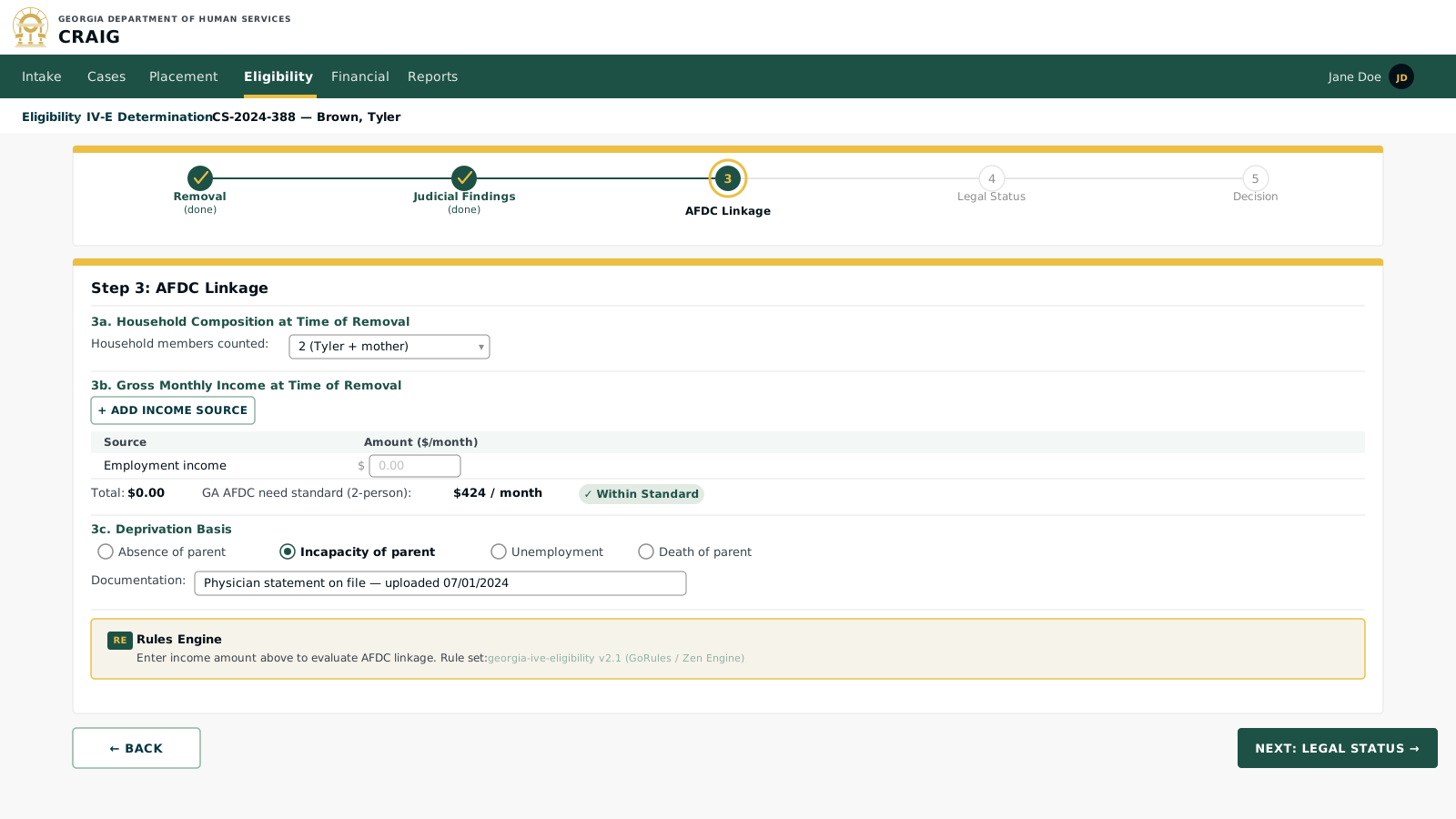
Key elements:
-
Step progress bar: workers cannot jump ahead; each step must be completed before proceeding; completed steps show a checkmark and can be revisited.
-
Jurisdiction-specific income standard: the Aid to Families with Dependent Children (AFDC) need standard displayed is pulled from the jurisdiction’s rule set, not hardcoded; states configure their own 1996 AFDC standards in the JDM rule set.
-
Rules Engine panel: visible on every step; shows provisional eligibility status in real time as data is entered, with the rule set name and version always displayed.
-
Deprivation documentation: free text or linked document; required for certain deprivation bases before the determination can be finalized.
Screen 2: Step 2 — Judicial Findings
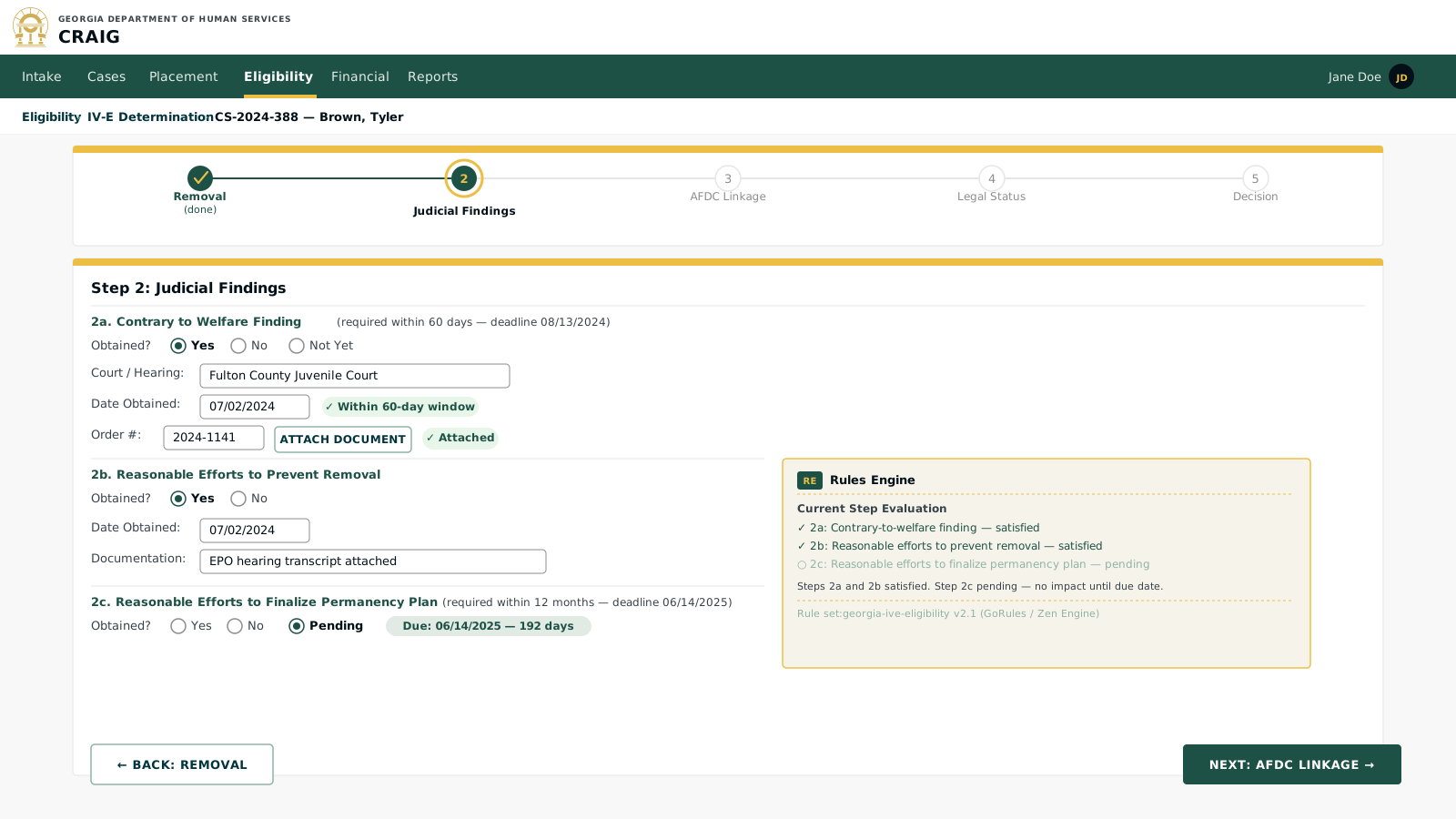
Judicial findings are among the most time-sensitive eligibility criteria. The contrary-to-welfare finding must be obtained within 60 days of removal, and the reasonable-efforts finding within 12 months. The built ruleset enforces the contrary-to-welfare window at determination time (a late finding fails the criterion); proactive deadline monitoring ahead of the determination is a design target.
Screen 3: Eligibility Decision Summary
After all steps are complete, the Rules Engine produces a final eligibility decision. The summary documents each criterion, the determination outcome, the federal reimbursement rate, and links to the generated eligibility notice.
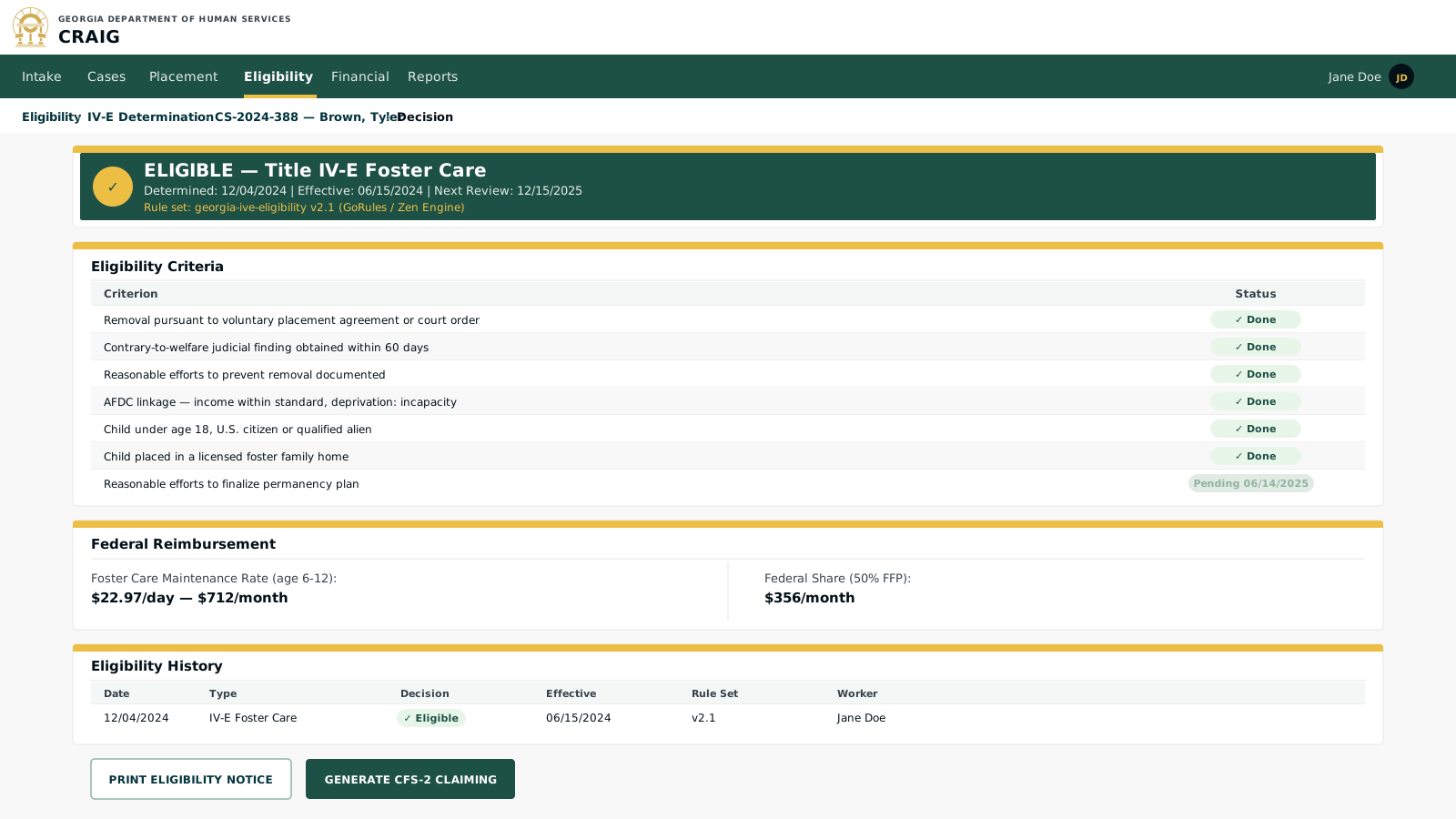
Key elements:
-
Eligibility outcome banner: the Rules Engine decision is prominently displayed with the rule set version; the worker cannot override the automated result without a documented exception workflow.
-
Criteria checklist: each federal criterion is listed with its status; the design target is that pending items (like the 12-month reasonable efforts finding) are tracked without blocking eligibility until their due date. (The shipped Georgia ruleset currently fails the determination when reasonable-efforts documentation is missing — the due-date grace window is not built.)
-
Federal reimbursement rate: automatically calculated from the jurisdiction’s rate table in the JDM rule set. As built, the rate is persisted on the determination record but no money path consumes it (the #1054 fence noted above); the design target is for it to feed payment generation.
-
Eligibility History: every determination is retained permanently; re-determinations at annual review create new entries rather than overwriting prior decisions.
-
Claiming: generates the state claiming submission for the Administration for Children and Families (ACF) to draw federal financial participation. As built, this is a claiming record generated from disbursed payments (no CFS-2 document rendering yet).